Sorry, this content is not available. Check out other listings in this category.
Best SEO Blogs Worth Following
The best SEO blogs do more than chase Google's latest update. They test ideas and explain what actually moves rankings. The sites below cover everything from link building to AI search and answer engines. Each earns its spot through depth, not noise.
Listed SEO Blogs are ranked by one score, applied the same way to every blog. It reflects how established each blog is and how widely other sites recognize and cite it.
Rankings are calculated independently from public data. Paid placements don't change a listing's score.
Primary Position Blog examines search engine optimization for beginners and experienced marketers. Articles cover SEO strategies, Google updates, and AI integration in SEO practices. The blog explains online reputation management, PPC impacts on SEO, and branded traffic analysis. Content breaks down complex SEO concepts into practical advice.
Leading SEO & Search Marketing Blogs for Rankings and AI Search
The Google Search Central Blog is the official source for news straight from Google's own search team. It covers algorithm updates, ranking systems, and changes to how Search works.
Site owners and developers read it to stay current on technical requirements and best SEO practices. Posts explain new features, structured data guidance, and how Google handles AI-generated content.
It also documents core updates and spam policy changes as they roll out.
Anyone serious about search engine optimization treats it as required reading. The writing stays plain and practical, with clear examples and links to supporting docs.
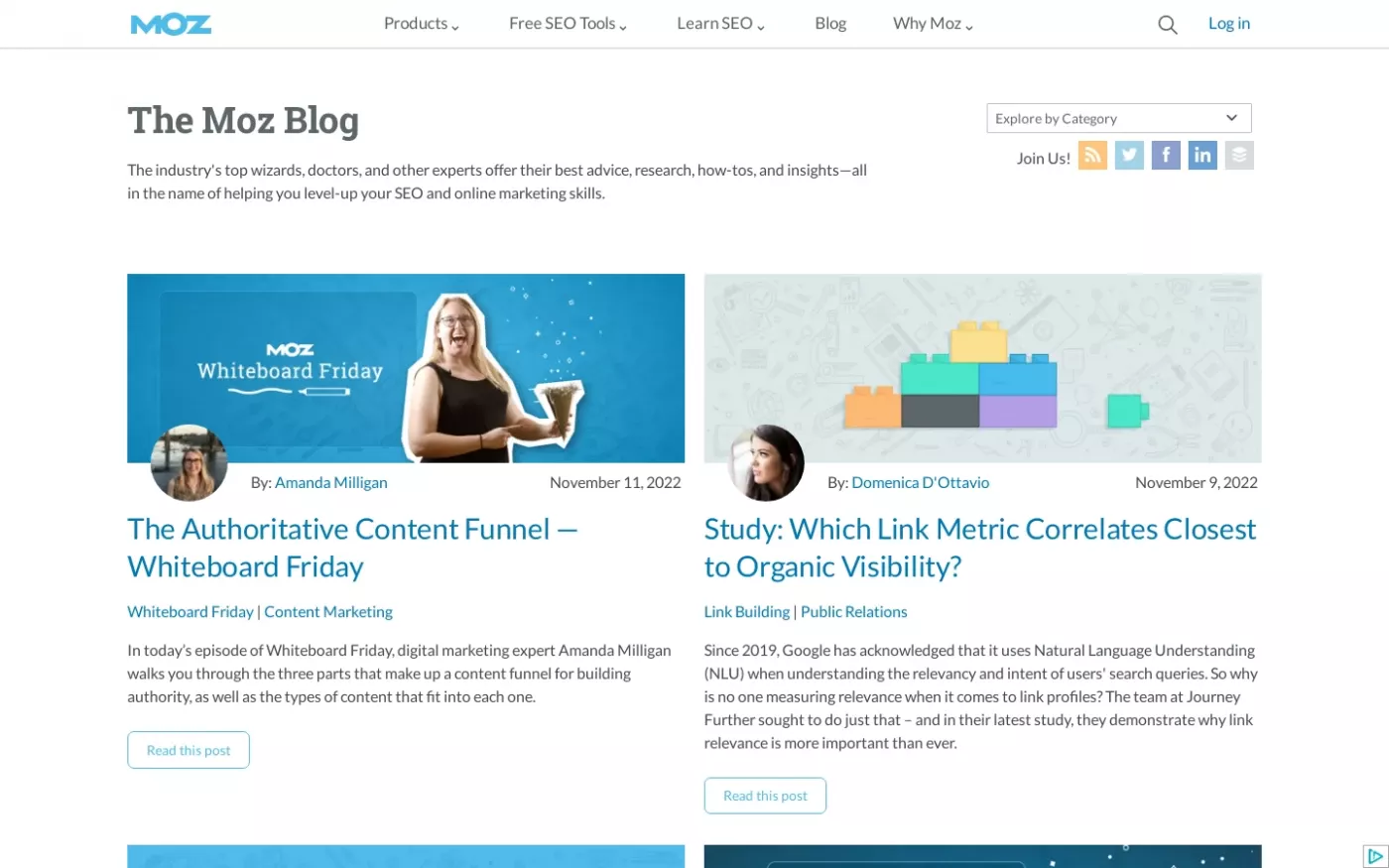
The Moz Blog is one of the longest-running SEO blogs on the web. It built its reputation on beginner-friendly guides and the original Whiteboard Friday video series.
Topics range from on-page basics to link building, local search, and domain authority, a metric Moz itself popularized.
The posts are educational, so newcomers can follow along without prior background. More advanced readers get research studies and data on ranking factors.
Moz also maintains free SEO tools and a well-known learning center alongside the blog. Guest contributors from across the industry add range to the regular in-house writers.
It remains a steady starting point for anyone learning how search rankings actually work.
Search Engine Land has reported on the search marketing industry since 2006. The site publishes daily news on SEO, paid search, and the wider world of digital marketing.
Its writers break down Google algorithm updates, Bing changes, and new ad formats as they happen. Long-running columns come from SEO practitioners who work in the field every day.
The site also runs the SMX conference series and produces research on industry trends. Coverage spans both organic search and pay-per-click, so readers get the full picture.
For many marketers, it is the first tab they open each morning. Reporting stays factual and quick to publish, which keeps the news genuinely timely.
Neil Patel built a large following by teaching digital marketing to beginners and business owners. His blog turns complex topics into step-by-step posts that anyone can act on.
Coverage includes SEO, content marketing, social media, and paid ads, with frequent how-to guides. Patel backs many posts with his own experiments and traffic data.
The writing aims squarely at people who want practical growth tactics, not theory. Free tools like Ubersuggest sit alongside the articles for hands-on keyword work.
He also publishes videos and podcasts that repackage the same lessons in other formats. The tone stays approachable, which is part of why the site reaches such a broad audience.
Search Engine Journal is a daily SEO news site read widely across the marketing world. It publishes guides, expert columns, and breaking coverage of search updates.
The site covers organic search, PPC, content, and the growing role of AI in how people find information. Its ebooks and webinars dig deeper than the average news post.
Contributors include working practitioners, so advice tends to be grounded in real campaigns. Coverage of Google updates is fast and detailed.
A large archive makes it a useful reference long after stories first run. For daily search news with practical takeaways, it sits among the most trusted names.
Backed by one of the biggest SEO platforms around, the Semrush Blog turns the company's data into practical advice. Posts cover keyword research, competitor analysis, content marketing, and paid search.
Many articles tie directly to features in the Semrush toolset, with worked examples. The blog also tracks how AI is reshaping search and keyword strategy.
Writers include both in-house experts and well-known guest names from the industry. It suits marketers who want tactics they can apply the same day.
The Ahrefs Blog is the content arm of the Ahrefs toolset, and it shows in the data-heavy posts. Tutorials walk through backlinks, technical fixes, and content that earns traffic.
The team conducts large-scale studies on ranking patterns, often using their own web index. Posts stay practical, with screenshots and clear steps to follow.
Beginners get glossary-style explainers, while veterans get original research. A companion YouTube channel covers much of the same ground in video form.
Running since 1996, Search Engine Watch is one of the oldest search marketing publications still active. It covers SEO, PPC, analytics, and shifts in how search engines rank pages.
Articles mix news with longer strategy pieces aimed at working marketers. The site has tracked nearly every major Google change over its long history.
Coverage leans toward practical application rather than pure theory. It remains a solid reference for both current trends and search history.
The Yoast SEO Blog is run by the team behind the popular WordPress plugin. Posts focus on content optimization, technical SEO, and getting the basics right.
Much of the advice ties to WordPress, which makes it especially useful for site owners on that platform. The writing keeps things simple enough for non-experts to follow.
Free guides walk readers through readability, structured data, and on-page SEO setup. Regular updates track how core Google changes affect everyday site owners.
Barry Schwartz has covered daily search news on Search Engine Roundtable since 2003. The site summarizes chatter from forums, Google statements, and the wider SEO community.
Posts are short and frequent, flagging algorithm updates and ranking volatility as they surface. It often spots Google changes before larger outlets report them.
The format suits readers who want a quick daily pulse on search. Comment threads add working-practitioner reactions to each story.
Founded by Brian Dean and now part of Semrush, Backlinko built its name on in-depth, data-driven guides. Each post tends to cover one topic in full detail.
The blog is known for link-building strategies, on-page tactics, and original research studies. Older guides get updated rather than left to age.
Dean still contributes, and the signature long-form style remains.
Matthew Woodward's Search Logistics offers a free library of step-by-step SEO tutorials. The guides span keyword research, on-page work, off-page SEO tactics, and recovering from algorithm penalties.
Each tutorial leans on real case studies and tested methods rather than guesswork. A growing section now covers AI-driven search and how it shifts traffic.
The award-winning blog suits anyone who wants to teach themselves the craft.
6 Cardinal Way suite 900, St. Louis, MO 63102, United States
Rankability is an SEO software company in St. Louis led by Nathan Gotch. Its blog focuses on ranking in both Google and AI tools like ChatGPT and Perplexity.
Posts cover generative engine optimization, content strategy, and how to rank inside AI answers. The team also runs an academy and a podcast on AI search.
It's a strong read for marketers adapting to AI-driven results.
Digital Marketing Talk is the blog of the London agency Digitalhound. It shares sharp views on SEO, content marketing, outreach, and video marketing.
Posts react to Google updates like the Helpful Content Update with practical next steps. The tone is opinionated and aimed at marketers who want a clear angle.
From Edinburgh, Alba SEO Services shares practical tips on search, social media, and web design. The award-winning agency writes for small businesses trying to grow online.
Posts break down Google updates and AI overviews in plain terms. Content stays approachable for owners without a technical background.
Paul Gordon writes about how AI is reshaping search and what it means for rankings. With 2 decades in the field, he focuses on e-commerce and Shopify SEO.
Recent posts cover AI overviews and how to measure visibility inside AI answers. The advice comes from testing and real client results, not theory.
Dublin-based SEO Solutions publishes one of Ireland's best-known SEO blogs. The agency covers technical SEO, international campaigns, and niche areas like healthcare and pharma.
Posts share search news, practical tips, and updates for Irish businesses. The team also handles PPC, web design, and white-label SEO across many sectors.
Few Scottsdale agencies lean into AI search the way DIAP Media does. The blog covers generative engine optimization, local SEO, and ranking in Google, ChatGPT, and AI overviews.
With over 15 years of experience, the team also offers a free SEO audit.
14875 Landmark Blvd suite 230, Dallas, TX 75254, USA
Agency Creative is a Dallas advertising and branding agency with a long-running marketing blog. Posts cover branding, paid advertising, healthcare marketing, content, and SEO.
The writing targets leaders building brands that outlast their competitors.
Paul Hoda's SEO blog shares technical search advice from a London SEO consultant working since 2005. Posts cover Core Web Vitals, CLS problems, sitemap removal in Google Search Console, and the reasons rankings drop after an update.
You will learn how to fix "Discovered - currently not indexed" pages, how to spot your real competition for a key phrase, and how AI search tools are changing optimization. Industry-specific guides look at dental clinic SEO and medical marketing.
Avanti Vision is a Phoenixville, PA agency known for video and inbound marketing. Its blog covers local SEO, lead generation, and content for small businesses.
Posts focus on attracting the right customers through video and search.
Out of Sacramento, Cosmoforge covers growth marketing for startups, e-commerce, and nonprofits. The blog shares practical tips on SEO, paid ads, and lead generation.
It's a useful read for small businesses and owner-operators short on time.
This Scotland-based UK agency tracks Google updates, migrations, and the rise of AI-driven search. Digital Landscope covers SEO, AEO, and PPC for businesses chasing steady growth.
The blog mixes news with practical SEO and audit tips.
Yes, almost all are free. Most SEO blogs publish full guides at no cost. A few gate ebooks, webinars, or courses behind a sign-up. You rarely need to pay to learn the core ideas.
Which SEO blogs are best for beginners?
Start with the teaching-focused ones. Moz, Yoast, and Neil Patel explain the basics in plain terms. They walk you through on-page work, keyword research, and how Google ranks pages. Save the data-heavy research blogs for later.
How often should a good SEO blog publish?
Quality beats frequency. Some sites post daily news, while others run one deep guide a month. Both models work. What matters is whether the advice holds up and gets updated.
Do SEO blogs still matter in the age of AI search?
More than ever. AI tools now pull answers from trusted sources. The better blogs already cover AI search optimization and answer engines. Following them helps you stay visible as search shifts.
How do I spot a trustworthy SEO blog?
Check the author and the data. Look for named experts with a track record. Trust posts that show real tests, not vague claims. Clear sourcing and recent updates signal a reliable site.
Should I follow tool company blogs or independent ones?
Follow both. Tool blogs like Ahrefs and Semrush bring large datasets and original studies. Independent writers often move faster and take sharper positions. Together, they give you range.
Can I learn SEO from blogs alone?
Mostly, yes. Free blogs cover keywords, links, technical fixes, and analytics in depth. Pair the reading with hands-on practice on a real site. Theory sticks better once you apply it.
Types of SEO Blogs Worth Following
Search news sites. These report daily updates and algorithm changes. Search Engine Land, Search Engine Journal, and Search Engine Roundtable lead this group. Read them to track Google moves in real time.
Tool company blogs. Moz, Ahrefs, and Semrush turn platform data into practical guides. Their studies often reveal patterns that smaller sites cannot measure. Expect strong research on rankings and backlinks.
Solo expert blogs. Backlinko, Neil Patel, and Paul Gordon share one person's tested methods. The voice is direct and the advice is specific.
Agency blogs. Firms like HellMedia, DIAP Media, and Alba SEO write from real client work. Posts are practical and often cover local search and AI visibility. They show what works in the field.
Official source blogs. The Google Search Central Blog posts straight from the search team. It documents ranking systems and spam policy changes. No third-party site carries the same authority.
How to Choose an SEO Blog to Follow
Check who writes it. Author expertise drives trust in any SEO advice. Look for writers with real campaign experience.
Look for original data. Tested results beat recycled tips. The best blogs run their own studies and share the numbers.
Match your skill level. Beginners need plain guides, not deep technical research. Pick sites that meet you where you are.
See how current it is. Search changes fast, so old posts can mislead. Favor blogs that update guides and date their work.
Watch for AI coverage. Strong blogs now track AI tools and answer engines. That focus shows they follow where search is going.