Sorry, this content is not available. Check out other listings in this category.

Mobile App Development Blogs Worth Reading in 2026

Last Updated: 26/05/2026

Mobile app development blogs are easy to find. Good ones are not. Most posts in this space repeat the same surface-level lists or recycle vendor brochures. The blogs below publish technical depth, cost breakdowns, and field experience from teams that ship apps.

Submit Your Blog

We evaluate Mobile App Development Blogs for content depth, originality, and reader value.

  • Technical depth and hands-on accuracy of coverage
  • Innovation reporting and forward-looking industry insight
  • Author knowledge demonstrated through practical expertise
  • Content freshness and frequency of meaningful updates
  • Consistency of public reviews across multiple platforms

Rankings are determined independently based on public information and editorial research.

Find the Top Mobile App Development Bloggers

x

Best-Rated App Development Blogs with Technical Depth and Real Field Experience

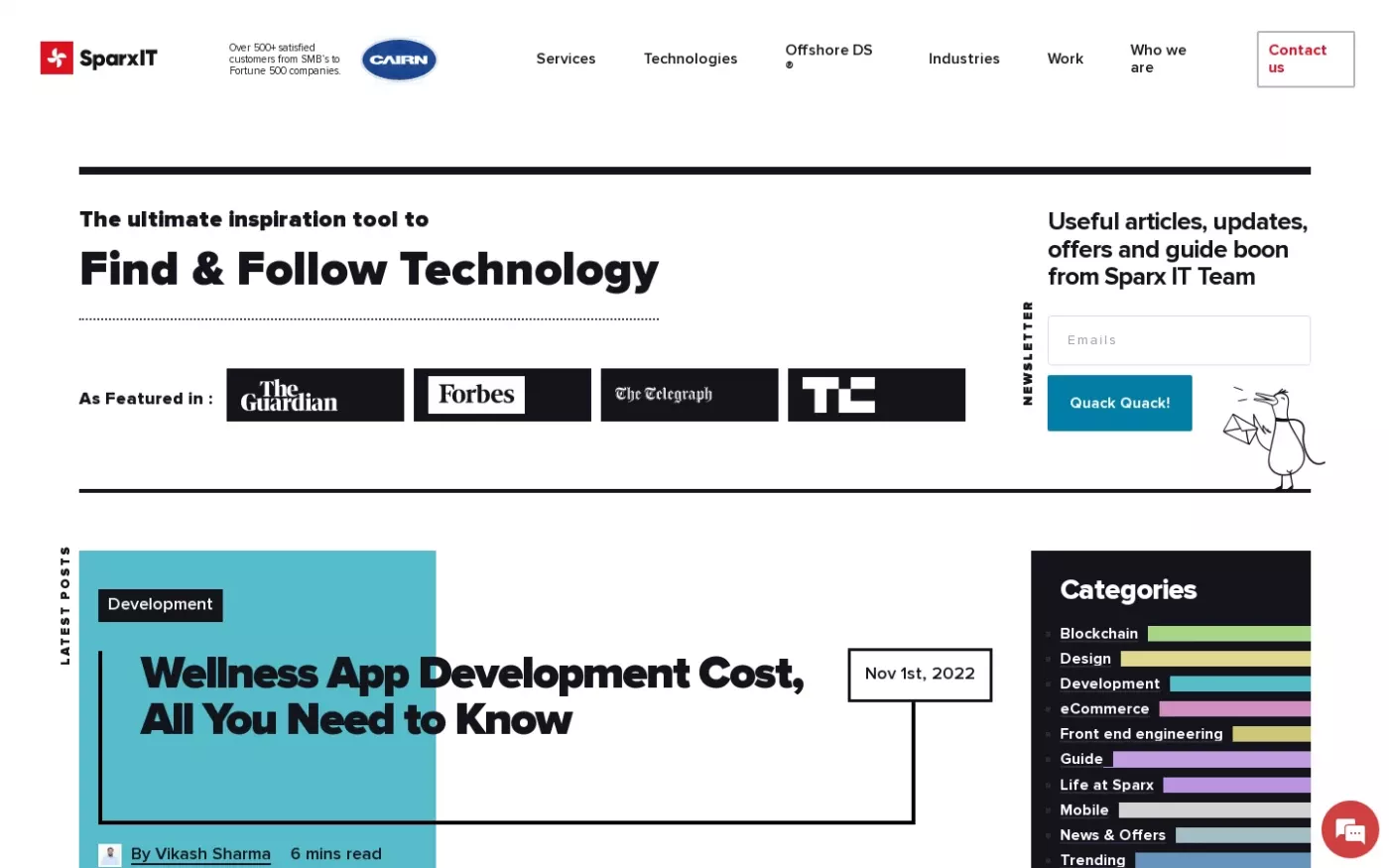
Screenshot of the Sparx IT Solutions Blog
477 Madison Ave 6th floor, New York, NY 10022, United States

The Sparx IT Solutions blog is a mobile app development blog run from New York City. Articles cover web and mobile app development, AI integration, blockchain, AR/VR, and digital transformation strategy for enterprises.

Posts pull from real client work across 15,000+ projects since 2007. You will find practical guides on legacy software modernization, MVP launches, generative AI, and product engineering. Each post breaks down complex topics into steps that founders, CTOs, and product managers can act on.

The editorial mix leans toward enterprise readers planning long-term tech investments. Topics include AI agents, RAG development, NLP, custom chatbots, and data analytics — written with depth rather than surface-level summaries.

Screenshot of the BuildFire Blog
750 B St UNIT 3210, San Diego, CA 92101, United States

BuildFire Blog covers mobile app building from a no-code platform perspective. The San Diego team writes for small businesses, agencies, ecommerce merchants, and creators who want to launch apps without a full dev team.

Recent posts include guides on ChatGPT and MCP integration, Shopify-to-app-store roadmaps, customer retention through native apps, and the trade-offs of using AI to build apps. The blog also covers app marketing, monetization, planning, and outsourcing decisions.

Categories span business workflows, fitness apps, education, real estate, events, and church apps. You will learn how to plan an app, pick the right plugins, and ship something users actually open more than once.

Screenshot of the Appinventiv Blog
79 Madison Ave, New York, NY 10001, United States

Appinventiv runs a New York-based blog focused on digital transformation, AI, and mobile app development. The publication draws on the team's record of 3,000+ digital deliveries across 35+ industries.

Articles cover AI agents, generative AI, RAG development, machine learning, computer vision, and AI consulting. Posts also tackle app cost guides, healthcare tech, fintech apps, and ecommerce platforms. The tone is practical and aimed at enterprise decision-makers.

You will find detailed breakdowns of build-vs-buy decisions, vendor selection, and budgeting for AI initiatives. The blog is updated frequently, so readers tracking mobile app trends and emerging AI categories have a steady stream of fresh material.

Screenshot of the TechGropse Pvt. Ltd. Blog
H-146, 147, Sector 63 Rd, H Block, Sector 63, Noida, Uttar Pradesh 201307, India

TechGropse publishes a development blog covering mobile and web trends, with a steady focus on cost breakdowns and emerging tech. The team has shipped 1,000+ digital deliveries across 25+ industries.

Posts cover iOS, Android, Flutter, React Native, hybrid apps, and wearables. Other categories include agentic AI, generative AI, multi-agent AI systems, blockchain, and game development. Articles dig into hiring developers, picking a tech stack, and estimating timelines for app builds.

The writing is direct and aimed at startup founders and product owners weighing options before committing budget.

Screenshot of the AppStudio Blog
388 Market St #1300, San Francisco, CA 94111, United States

AppStudio's San Francisco team writes about iOS, Android, React Native, Flutter, and web development. Recent posts cover zero-trust architecture for AI agents, product strategy, blockchain, IoT, and AR/VR. Articles tend to address security and architecture questions that come up once an app starts scaling.

Screenshot of the Semidot Infotech Blog
3024 Washington St, Boulder, CO 80304, United States

Semidot Infotech runs a Boulder-based blog covering web development, mobile apps, and blockchain. The team has delivered 500+ websites and 700+ mobile apps since 2011, and posts draw from that backlog.

Articles cover on-demand app niches like food delivery, taxi booking, telemedicine, eLearning, dating, and matrimonial platforms. Other posts tackle private GPT solutions, white-label products, and ERP. The writing leans toward founders looking at clone apps or marketplace concepts.

Screenshot of the Arka Softwares Blog: Latest Technology Insights, Web & Mobile Blog

Arka Softwares publishes app development guides from its Dallas office. Recent posts walk through how to build apps like Underdog Fantasy, Pronto, and Snibbet, with feature lists, tech stacks, and cost ranges.

Categories include mobile apps, web development, ecommerce, on-demand solutions, music streaming, and fantasy sports. Posts include market data, monetization models, and revenue stream breakdowns — useful for anyone scoping a clone app or a competitive product.

Screenshot of the Agicent Blog
60 E 42nd Street 46th Floor, New York, NY 10165, United States

Agicent's New York blog covers iOS, Android, React Native, full-stack, and MVP development. The team has shipped 1,000+ apps and writes about hiring developers, fractional CTO arrangements, offshore teams, and AI integration. Posts give concrete advice for founders thinking through budget, scope, and timeline before they kick off a build.

Screenshot of the Matellio Blog
675 N First St #1240, San Jose, CA 95112, USA

Matellio publishes from San Jose with a focus on enterprise software, AI, RPA, SaaS, and healthcare tech. The blog covers AWS and Oracle solutions, fintech, ecommerce platforms, and workflow modernization. Posts target IT leaders and product managers running scalability and innovation projects.

Screenshot of the Zazz Blog
500 Mercer St, Seattle, WA 98109, USA

Zazz writes about enterprise IT strategy and digital innovation from its Seattle office. Posts cover organizational resilience, IT modernization, IoT, wearables, and fitness tracking apps. The tone is geared toward CTOs and IT directors planning long-horizon tech roadmaps.

Screenshot of the Alpha Bravo Development Blog
1178 Broadway 3rd Floor #1084, New York, NY 10001, United States

Alpha Bravo Development shares tips for small and medium businesses building custom software. Posts cover why SMBs should not depend on third-party tools, how to cut software overhead, and why e-learning companies need custom apps. The team works across healthcare, finance, aviation, real estate, and retail.

Screenshot of the The Big Fish App Development Blog
3030 N Rocky Point Dr W Ste 150, Tampa, FL 33607

Big Fish runs a Tampa-based blog covering custom app development, AI automation, and software for ops-driven teams. Categories include planning, process, design, UX, maintenance, security, and industry trends. Posts answer questions about ROI, hiring staff vs. consultants, and measuring automation results.

Screenshot of the Mobmaxime Blog
789 E El Camino Real, Sunnyvale, CA 94087, United States

Mobmaxime publishes mobile and web development content from Sunnyvale, with 500+ projects delivered across the US, Canada, and UK. Topics include Xamarin, AR, iBeacon, ecommerce, and digital marketing services for businesses of any size.

Frequently Asked Questions

What makes a mobile app development blog worth following?

Real project experience. A good app dev blog draws on actual builds, not just keyword research. Look for case studies, code snippets, and specific cost ranges. Posts that name technologies, tradeoffs, and failure modes carry more weight than generic trend pieces.

How often should a development blog publish?

Steady cadence beats volume. A weekly or biweekly post by a practitioner beats daily AI-generated filler. Check the dates on the last five posts. If they cluster in one week and then go quiet, the blog likely runs on ad-hoc batches.

Should I trust app cost estimates from a development company's blog?

Treat them as ranges, not quotes. Cost guides from dev shops reflect their pricing models and regions. Indian-based teams quote different numbers than US or Canadian ones. Cross-check at least three sources before you budget. Then ask the team directly for a written estimate tied to your scope.

What topics should a strong mobile app development blog cover?

Build, scale, ship. A serious blog covers iOS and Android stacks, plus cross-platform frameworks like React Native and Flutter. Backend architecture, app store submission, and post-launch maintenance should appear too. AI integration, security, and monetization round out the list. Blogs that only cover one phase miss the parts where most projects fail.

How do I tell a blog post from a sales page?

Read the conclusion. Sales-driven posts end with a quote request or a pricing CTA. Educational posts end with a takeaway, a checklist, or a link to a related deep-dive. If every article on the site ends with "contact us today," you are reading marketing, not engineering content.

Are AI-written app development blogs reliable?

Some are, most are not. AI can produce a passable overview of well-documented topics. But it often gets version numbers, pricing, and platform-specific quirks wrong. Look for author bios with real names, GitHub profiles, or conference talks. A blog without bylines is harder to trust on technical claims.

What red flags should I watch for?

Stuffed keywords and stale dates. Watch for posts where the same exact phrase appears six times in one paragraph. That post was built for ranking, not reading. Posts dated this year but referencing iOS 14 or Android 11 as current are also a tell. Old technical content gets stale fast.

Types of Mobile App Development Blogs

Agency blogs. Most blogs on this list belong to app development companies. The content reflects what their teams have built and what their sales pipeline asks about. Useful for cost guides, hiring advice, and real-world case studies.

Platform builder blogs. Sites like BuildFire cover no-code and low-code app creation. Posts focus on app marketing, monetization, and platform-specific features like Shopify or ChatGPT integration. Best for founders without a dev team.

Technical deep-dive blogs. A smaller set publishes detailed engineering content on APIs, DevOps, backend patterns, and security architecture. These read more like documentation than marketing and serve working developers.

Industry trend blogs. Some publishers focus on AI, IoT, blockchain, AR/VR, and emerging tech. Posts often track market data, funding rounds, and platform announcements. Good for CTOs scoping long-term roadmaps.

Cost and outsourcing blogs. A common category covers "how much does it cost to build an app like X" topics. Useful as a starting point for budget conversations. Cross-check the numbers against your region and scope.

Startup and MVP blogs. Content here targets founders shipping a first version. Topics include MVP scope, fractional CTO arrangements, and product validation. Less technical, more strategic.

How to Choose a Mobile App Development Blog to Follow

Match the blog to your role. A CTO needs different content than a founder pricing a build. Pick blogs whose primary audience matches yours.

Check the author byline. A blog written by named engineers or product leads is more reliable. Generic "editorial team" bylines are harder to trust on technical claims. Look for LinkedIn profiles and conference history.

Read the most recent post and the most-shared one. If both are useful, the bar is consistent. If the front-page post feels thin compared to the popular one, the site may be coasting.

Verify technical claims against primary sources. Apple, Google, and major framework maintainers publish their own changelogs. If a blog contradicts the official docs, trust the docs.

Watch for editorial independence. Agency blogs will favor the tech stacks their teams use. That is fine, but read across several sources before locking in a framework decision.