Sorry, this content is not available. Check out other listings in this category.
Top SEO Blogs Worth Reading
SEO blogs follow a search engine that keeps changing how it ranks pages. Google confirms several core updates a year. The best ones explain what each change means for backlinks, site audits, and search results. The blogs below include Google's official blog, daily news sites, software companies, and independent SEO consultants.
Listed SEO Blogs are ranked by one score, applied the same way to every blog. It reflects how established each blog is and how widely other sites recognize and cite it.
Rankings are calculated independently from public data. Paid placements don't change a listing's score.
Primary Position Blog examines search engine optimization for beginners and experienced marketers. Articles cover SEO strategies, Google updates, and AI integration in SEO practices. The blog explains online reputation management, PPC impacts on SEO, and branded traffic analysis. Content breaks down complex SEO concepts into practical advice.
Straight from Google's search team, the Google Search Central Blog is where official announcements land first. Posts cover ranking updates, new Search features, crawling and indexing, structured data, and changes to Search Console reports.
The blog went by Google Webmaster Central until a 2020 rebrand. It links readers to the Search Status Dashboard, the SEO Starter Guide, and Search Central Live events. Recurring series like Crawling December and Robots Refresher break technical topics into short lessons.
For anyone who wants Google's own wording instead of someone's interpretation, this is the place to start.
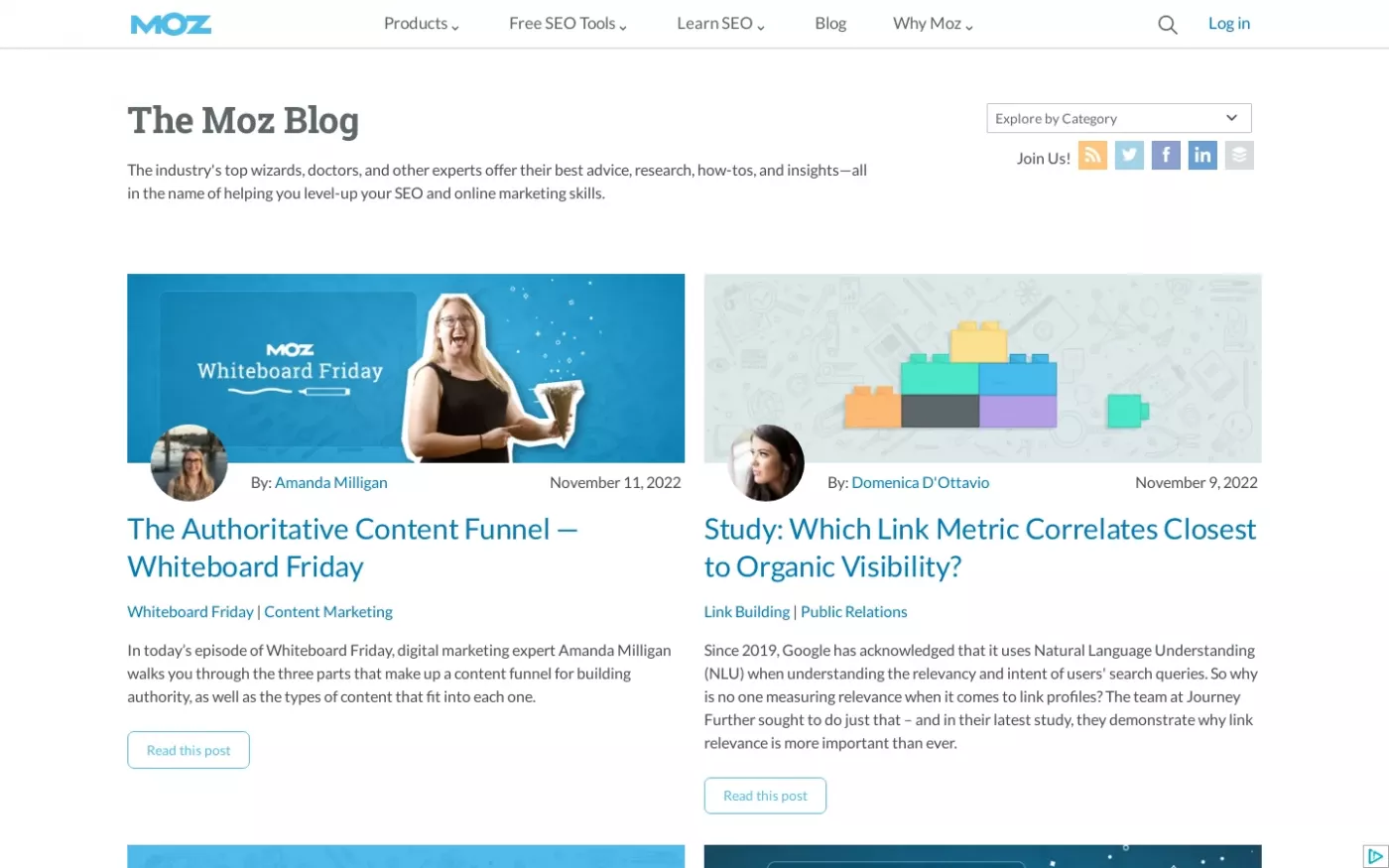
Whiteboard Friday made the Moz Blog famous. The weekly video series started in 2007, with an expert explaining one SEO concept in plain language on a whiteboard.
Moz began in Seattle in 2004 as SEOmoz, founded by Rand Fishkin and Gillian Muessig. That makes this one of the longest-running SEO blogs online. Articles cover link building, local search, ranking factors, and AI search. Many guides tie back to Moz metrics like Domain Authority, so readers learn terms that show up in agency reports.
It's a solid pick for marketers who want clear explanations of the fundamentals.
Danny Sullivan co-founded Search Engine Land in 2006, and the site has reported on the industry every day since. It's a go-to search marketing news site for SEO, PPC, and AI search, including Google core updates and generative engine optimization (GEO).
Semrush bought its parent company, Third Door Media, in 2024. The site continues to publish independent news, analysis, and expert columns. The same team runs SMX, the Search Marketing Expo conference series, and a daily newsletter that rounds up the top stories.
Neil Patel's blog teaches digital marketing to beginners and small business owners. Patel co-founded the agency NP Digital and owns the keyword tool Ubersuggest, and his team writes much of the content.
Posts cover SEO, paid ads, social media, and measurement topics like attribution and customer lifetime value. Each article opens with a Key Takeaways summary and an estimated reading time. That format makes it easy to skim a topic before reading the full guide.
Daily news and how-to guides share space at Search Engine Journal, published by Alpha Brand Media. Coverage includes SEO, PPC, AI search, content marketing, WordPress, and ecommerce.
Beyond articles, SEJ runs webinars, SEJ Live online events, and the SEJ Show podcast. Its Ask an SEO column answers reader questions in depth. Readers can also browse a Google algorithm history, an ebook library, and the yearly State of Search report.
Original data studies set the Semrush Blog apart. The marketing software company publishes research on topics like how AI Overviews appear in commercial searches.
Practical guides cover keyword research, local SEO, digital PR, and Google Analytics 4. Many tutorials show how to run each task inside the Semrush toolkit. For deeper learning, the free Semrush Academy offers video courses.
The Ahrefs Blog is the content arm of Ahrefs, the Singapore-based SEO software company. Its Data & Studies section publishes large-scale research, such as an analysis of 260 million AI prompts.
Tutorials walk through backlinks, on-page fixes, and AI citation tracking. For structured learning, Ahrefs Academy offers free courses and a certification exam. The team also produces the Ahrefs Podcast, Ahrefs TV videos, and a weekly newsletter.
Watching search since 1996, Search Engine Watch is one of the oldest names in the field. The site reports on Google news, SEO, PPC, AI search, and analytics. It also covers industry events and broader digital marketing trends for working marketers.
The team behind the Yoast SEO plugin for WordPress writes the Yoast SEO Blog. Articles explain content SEO, site structure, and alt text in simple steps, and monthly recap posts sum up industry news. Yoast also covers Shopify SEO, while its Yoast SEO Academy offers training for beginners and advanced users.
Barry Schwartz runs Search Engine Roundtable, a daily search news blog published by RustyBrick. He follows forums and social threads to spot Google ranking volatility, algorithm updates, and Google Ads changes as they surface. Daily forum recaps and video recaps make it easy to catch up in a few minutes.
Long, in-depth guides are Backlinko's trademark. Brian Dean founded the site, which is part of Semrush, and he popularized the Skyscraper Technique for link building. Topics include E-E-A-T, copywriting, and AI search optimization, plus a weekly newsletter with marketing tips.
Search Logistics is Matthew Woodward's free archive of SEO tutorials. Lessons cover keyword types, penalty recovery, and optimizing for Google's AI Overviews. Readers also get a downloadable SEO checklist and case studies that show traffic and revenue results.
6 Cardinal Way suite 900, St. Louis, MO 63102, United States
Out of St. Louis, Rankability builds software for content optimization and AI search visibility tracking. Co-founder and CEO Nathan Gotch leads the company. Its blog focuses on answer engine optimization (AEO), GEO, content strategy, and side-by-side tool comparisons.
AI search visibility is the main thread running through Digital Marketing Talk, the blog of London agency Digitalhound. Posts look at zero-click results and SEO tied to revenue. Travel and legal brands get extra attention, which makes it useful for marketers in those sectors.
Based in Edinburgh, Alba SEO Services marked ten years in business in 2023. Its blog shares plain advice on SEO audits, URL structure, and AI's effect on search. The agency also offers web design, PPC, and social media services.
Paul Gordon is a UK freelance SEO consultant with 2 decades in search marketing. He writes about ecommerce and Shopify SEO, site migrations, and how AI is changing search results. He handles client work personally, so his posts draw on hands-on projects.
From an office on Trinity Street in Dublin, SEO Solutions works with businesses across Ireland. Its blog offers practical guides, such as how to start an online business in Ireland.
DIAP Media is a Scottsdale agency that has offered SEO services since 2009. Its blog explains AI SEO, including how brands get cited in ChatGPT, Perplexity, and Google's AI Mode.
14875 Landmark Blvd suite 230, Dallas, TX 75254, USA
Branding sits at the center of Agency Creative, a Dallas advertising firm. Its blog covers healthcare marketing, private equity growth, brand naming, paid ads, and SEO.
Primary Position has run search campaigns from New York City since 2005. Its SEO blog takes direct, sometimes contrarian views on sitemaps, link spam, and online reputation management.
A London consultant since 2005, Paul Hoda writes how-to posts about Core Web Vitals, indexing problems, and recovering from ranking drops. He also covers dental and healthcare SEO.
200 Lincoln Ave Suite 101, Phoenixville, PA 19460, USA
Near Philadelphia, Avanti Vision shares marketing tips for small businesses, distributors, and manufacturers. Topics include video marketing, local SEO, YouTube ads, and direct mail retargeting.
Cosmoforge is a Sacramento growth marketing agency. Its Insights blog tackles Google Ads lead quality, Local Services Ads, and why service pages fail to rank.
Official guidance. Google Search Central Blog posts announcements straight from Google's search team. Start here when you need the source, not a summary.
Daily search news. Search Engine Land, Search Engine Journal, Search Engine Roundtable, and Search Engine Watch report updates as they happen.
Research and tutorials. Ahrefs, Semrush, Moz, and Backlinko pair how-to guides with studies built on their own tool data.
Beginners and WordPress users. Yoast, Neil Patel, and Search Logistics explain the basics step by step.
AI search and GEO. Rankability, DIAP Media, and Digital Marketing Talk focus on getting brands cited in AI answers.
Consultant insights. Paul Hoda, Paul Gordon, and Primary Position write from their own client work.
Are SEO blogs still useful with AI search?
Yes, for staying current. AI chatbots often repeat advice that is months old. Blogs report Google changes as they roll out and show the evidence behind each claim.
How often should you check SEO news?
Once a week works for most site owners. Skim one news site or newsletter for the big stories. After a confirmed core update, check Google's Search Status Dashboard before changing anything.
Can you trust SEO advice from tool companies?
Mostly, with one caveat. Software companies publish some of the best original research in the industry. But their tutorials tend to use their own products, so confirm the method works without them.
How to Choose an SEO Blog to Follow
Check the author. Look for a named writer with hands-on search experience. Anonymous posts make advice harder to judge.
Look for proof. Strong posts show screenshots, traffic data, or how a study was run. Claims without evidence deserve a second source.
Compare with Google's documentation. If a tip contradicts Google Search Central, find out why before you act on it.
Check the date. SEO advice ages fast, especially on ranking factors and AI search. Prefer guides updated after the last major core update.