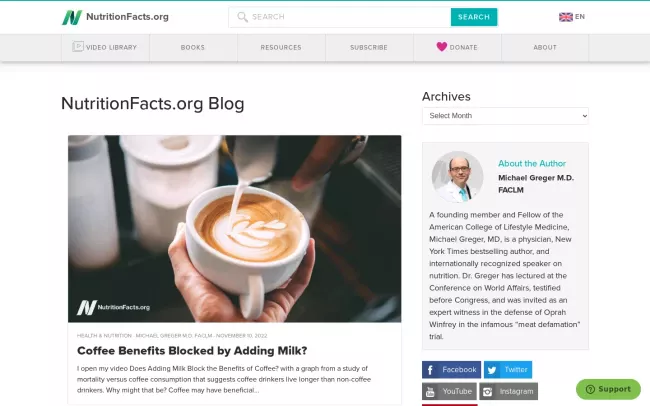
NutritionFacts.org is a nonprofit site where physician Michael Greger, M.D., FACLM, breaks down peer-reviewed nutrition research. Each blog post turns a recent study into a short, plain-English read. Topics include gut health, sweeteners like allulose, supplements, and plant-based diets.
Everything on the site is free. It runs no ads and takes no corporate sponsorships, so it relies on reader donations. Most posts also come as short videos, and there are podcasts, webinars, and printable guides.
Dr. Greger is the New York Times best-selling author of How Not to Die, How Not to Diet, and How Not to Age. His Daily Dozen app helps readers track the foods he recommends eating each day.
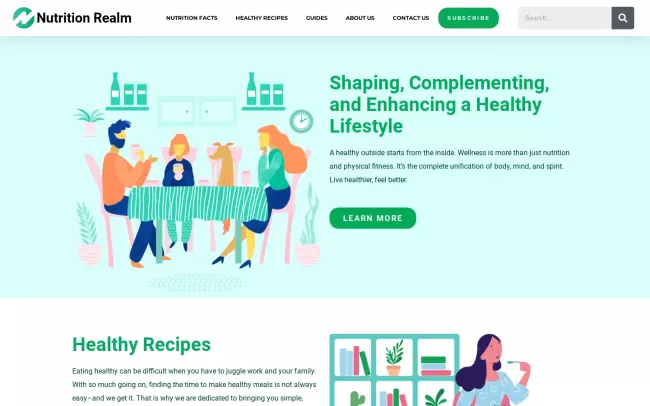
Alicia Butner founded Nutrition Realm after changing her own eating habits. Today it's a healthy eating blog built around simple family meals. Most recipes are quick to make and use affordable, easy-to-find ingredients.
Other articles explain food facts and clear up common myths. Guides cover supplements, popular diets like paleo, and family health. Readers can also join a newsletter for new recipes and healthy living tips.
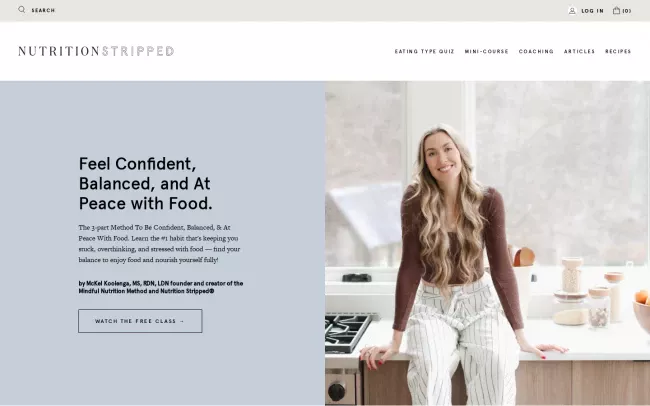
McKel Hill Kooienga, MS, RDN, LDN, built Nutrition Stripped around mindful, non-diet eating. Her Foundational Five framework shows readers how to build balanced meals without tracking or cutting out foods.
The site mixes recipes with articles on mindful eating, meal prep, and daily habits. Kooienga also offers self-paced courses, a cookbook, and a free three-day Peaceful Eating Guide. Her work has appeared in Women's Health and Bon Appétit.
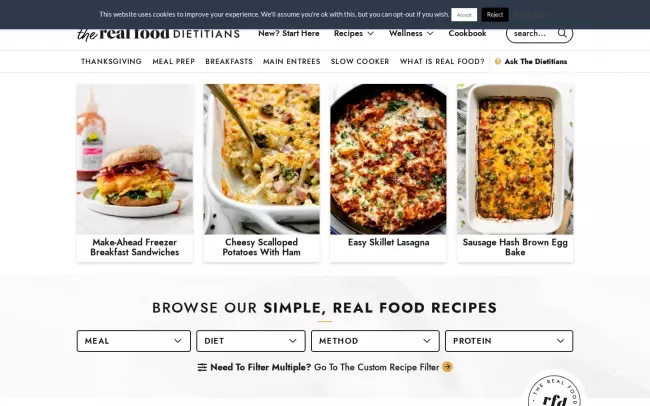
The Real Food Dietitians share recipes made with whole, minimally processed foods. Three registered dietitians run the site: Jessica Beacom, Stacie Hassing, and Jessie Shafer. Most dishes are gluten-free, and a custom filter helps readers sort by diet or food allergy.
Beacom and Hassing launched the brand in 2015. Their cookbook, The Real Food Table, became a national bestseller.
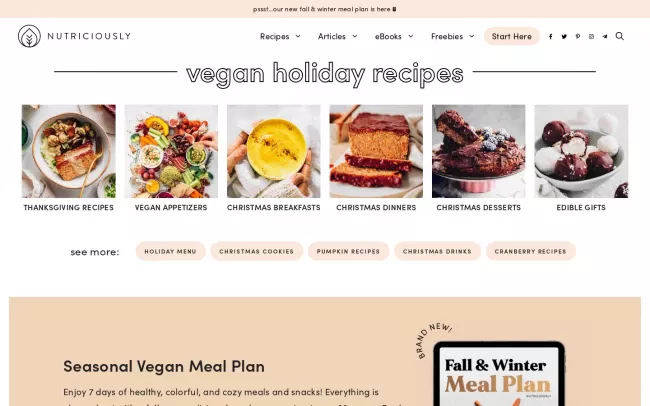
Nutriciously is a vegan food blog for people new to whole-food, plant-based eating. Recipes are sorted by meal, season, and diet, with oil-free, gluten-free, and 30-minute options. Alena, a certified vegan nutritionist, creates the content. Beginners can take a free six-part course on going vegan.

Andy De Santis, RD, MPH, is a Toronto dietitian whose nutrition blog focuses on fatty liver disease, anti-inflammatory foods, and weight loss. He also wrote The Essential Diet for Fatty Liver.
Alkaline for All runs a beginner-friendly alkaline diet blog. It offers food lists and easy recipes for breakfasts, salads, and berry smoothies.