
Serious Eats is a food blog built around testing. Recipes get run again and again until the method holds up in an ordinary home kitchen.
The site pairs those recipes with science-based explanations of why a technique works. J. Kenji Lopez-Alt, who joined founder Ed Levine in 2009, built The Food Lab column here and still consults on the culinary side.
Alongside recipes, you will find equipment reviews, ingredient guides, and cuisine explainers. Publishing since 2006, Serious Eats has earned James Beard recognition for its work. It suits cooks who want the reasoning behind a step, not just the step.

Crowd-sourced recipes are what set Food52 apart. Home cooks submit dishes, editors test them, and the strongest ones become part of a shared library.
Started in 2009, the site pairs that collection with a cookware shop and its own line of cookbooks. Seasonal features run alongside the archive, covering topics such as tomato season, weekend menus, and outdoor entertaining.
This cooking blog has taken James Beard Publication of the Year honors, and its cookbooks have reached the New York Times bestseller list.

Every recipe here clears one of three bars: 10 ingredients or fewer, one bowl, or 30 minutes. Minimalist Baker has held to that rule since Dana Shultz started the site in 2012.
Most dishes are plant-based, and the recipe index filters by gluten-free, vegan, dairy-free, and naturally sweetened, so you can skip what does not fit.
Beyond single recipes, there are large round-ups grouped by season and occasion. How-to guides cover pantry basics like cashew milk, buckwheat flour, and a 1:1 baking blend. A good pick when time or long ingredient lists are the sticking point.
Latest Blog Posts

Deb Perelman has been writing Smitten Kitchen from a small New York City apartment kitchen since 2006. She reworks a recipe until it is right, then explains what changed and why.
The archive leans toward everyday cakes, pasta, salads, and the occasional cocktail. Three of her cookbooks have landed on the New York Times bestseller list.
Latest Blog Posts

Steamy Kitchen is a recipe blog centered on fast Asian home cooking. Jaden Rae covers Chinese, Thai, and Vietnamese dishes with short ingredient lists and weeknight timing.
She has cooked on television and written a cookbook, and the site carries that same practical tone. Useful when you want takeout flavors without a long shopping trip.
Latest Blog Posts
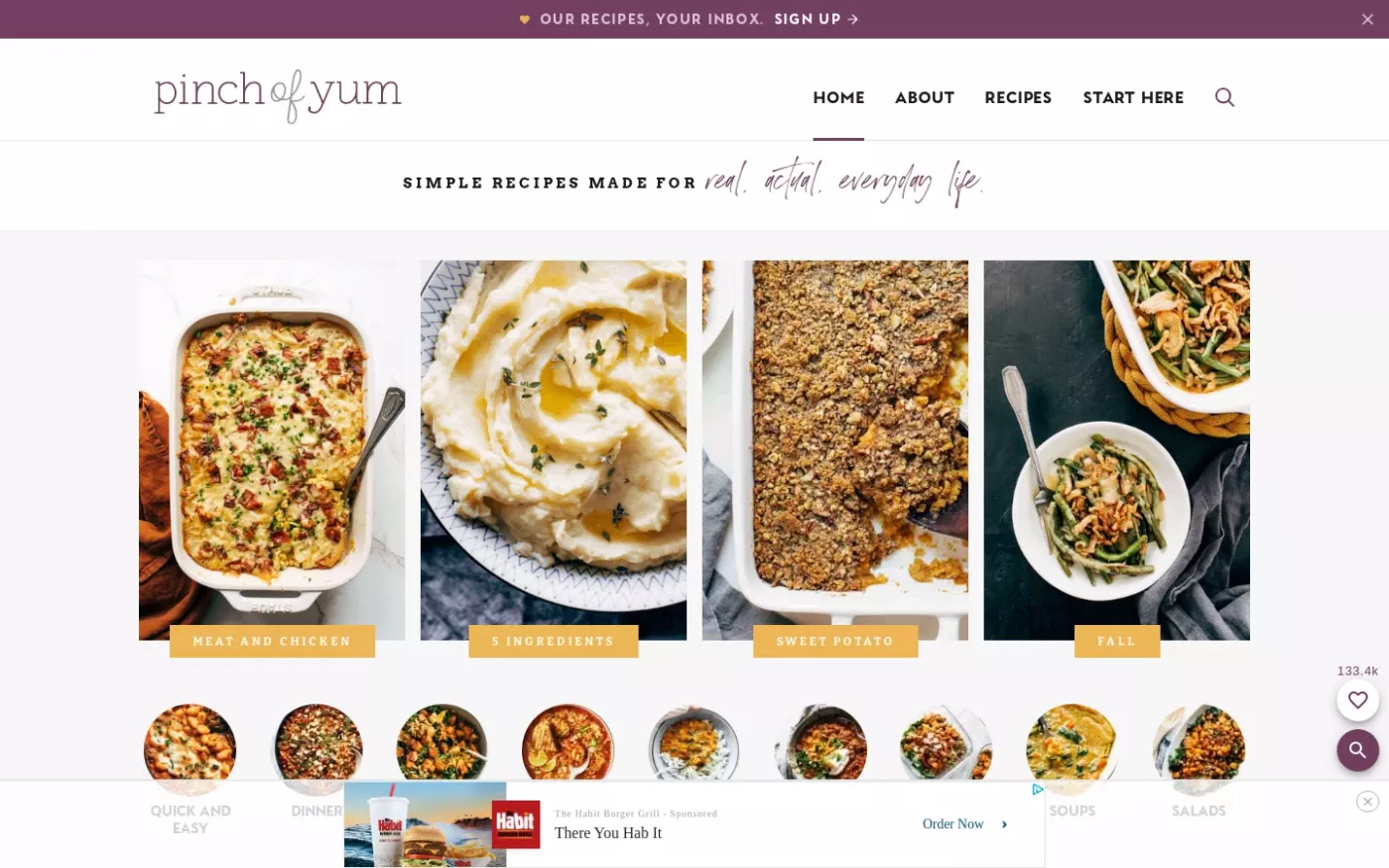
Lindsay Ostrom runs Pinch of Yum out of Minnesota, publishing simple recipes aimed at ordinary weeknights. Millions of readers hit the site every month.
Dinners, soups, and quick lunches fill most of the archive. The team also writes openly about the business side of running a food blog.
Latest Blog Posts

Vegetarian whole-food cooking anchors Cookie and Kate. Kathryne Taylor builds her recipes around vegetables, grains, and beans rather than meat substitutes.
Her cookbook Love Real Food follows the same approach. The blog takes half its name from her dog, Cookie, and reads casually enough for beginners.
Latest Blog Posts

A Couple Cooks is written by Sonja and Alex Overhiser, who have published together since 2010. Vegetarian, Mediterranean, and seafood cooking make up most of what they post.
They have written several cookbooks and run a podcast alongside the site. Recipes come with clear timing and substitution notes.
Latest Blog Posts

Cost per serving sits at the top of every Budget Bytes recipe. Beth Moncel breaks down what a dish actually costs before you start cooking.
That focus makes it one of the more practical cooking blogs for students, renters, and anyone watching grocery bills. Recipes rely on pantry staples and stretch leftovers rather than calling for one-off ingredients.

Seasonal produce drives the recipes at Love and Lemons. Jeanine Donofrio builds vegetarian dishes around whatever is good at the market that month.
Her cookbooks have been bestsellers, and the site keeps the same bright, vegetable-forward style. Photography is strong enough to cook from.

Adam and Joanne Gallagher have run Inspired Taste since 2009. They test each recipe in their own kitchen and film step-by-step videos to go with it.
The archive covers dinners, sides, and basics like roast chicken and homemade dressings. Handy for cooks who prefer watching a technique before trying it.
Latest Blog Posts

I am a Food Blog covers modern Asian and global home cooking. Stephanie and Mike Le have been publishing since 2010 and were named Saveur Blog of the Year.
Posts mix noodle dishes, rice bowls, and desserts with sharp photography. A fit for people who want something less familiar than weeknight standards.
Latest Blog Posts
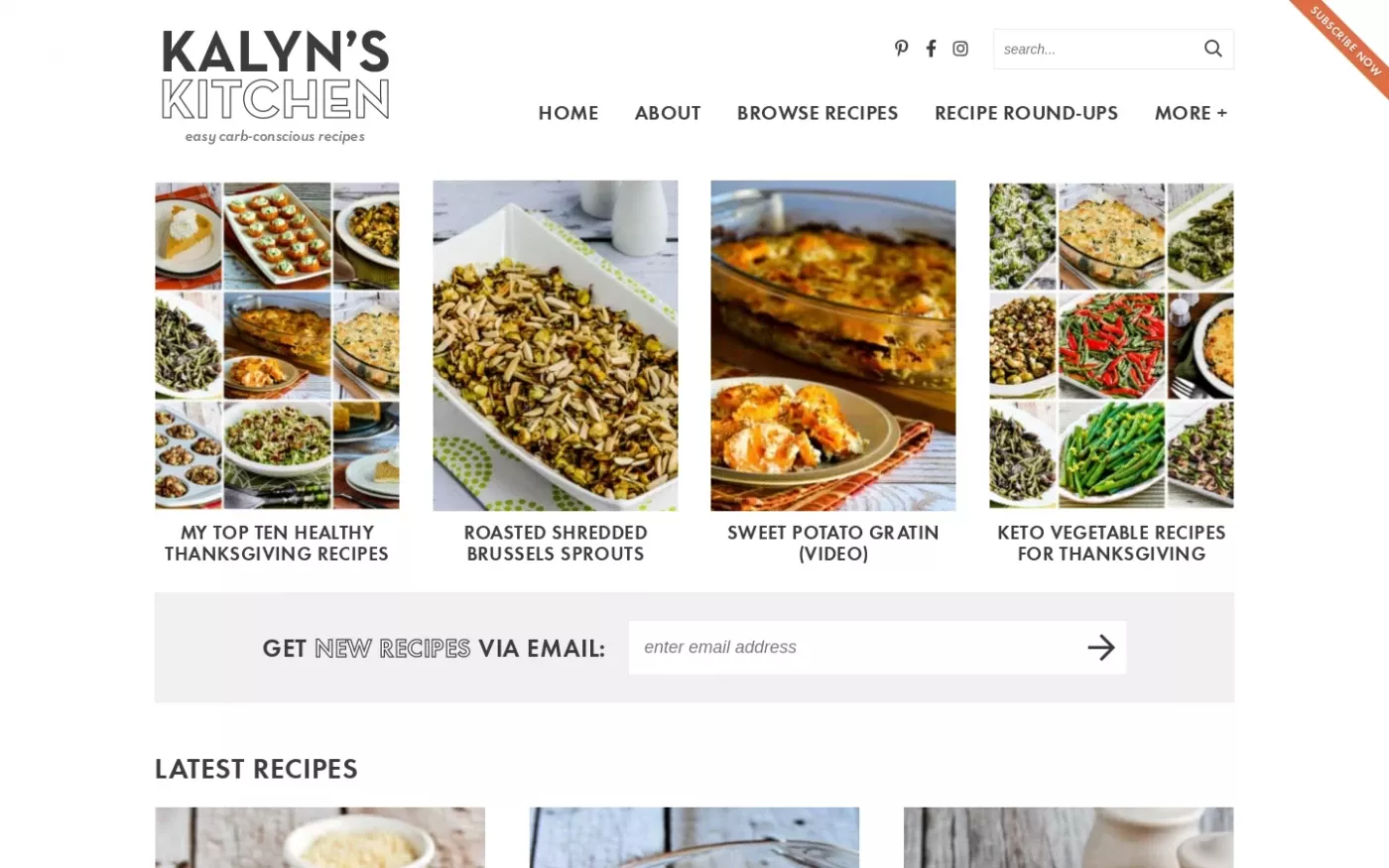
Publishing since 2005, Kalyn's Kitchen is one of the longer-running low-carb recipe sites online. Kalyn Denny writes from Utah and began with South Beach Diet cooking before moving toward keto and carb-conscious meals.
Many of the recipes are gluten-free, and the index sorts by carb level.
Latest Blog Posts

Sara Forte writes Sprouted Kitchen around whole-food cooking for families. Recipes follow the seasons and keep prep manageable on a weeknight.
She is the author of Bowl and Spoon, and her husband, Hugh, does the photography.

Asian home cooking is the entire focus at Honest Food Talks, a London-based site covering Chinese, Japanese, Korean, and Malaysian dishes.
Bubble tea, mochi, ramen, and takeaway classics get the most attention, backed by video tutorials on YouTube. The team also publishes ingredient explainers and Asian snack reviews.

Yummy Indian Kitchen publishes home-style Indian recipes with a Hyderabadi slant. Biryanis, curries, and everyday vegetarian dishes make up most of the archive.
Instructions stay simple enough for cooks new to Indian spices.

Rather than home cooking, Becoming a Chef covers the professional kitchen. Christopher Flatt writes about UK training routes, the chef brigade from commis through head chef, and chef work in cities like London, Dubai, and Tokyo. The site also carries knife skills, base recipes, and dish cost calculators.

Jennifer Bell writes A Sweet Alternative about plant-based recipes made with nutritious ingredients. Date-sweetened desserts, flourless bread, and gluten-free baking fill much of the archive, alongside dinners and sides.

The Eating Emporium aims a little higher than most weeknight sites. Rachel posts dishes like ragù alla bolognese, croque-monsieur, and Black Forest trifle, plus cocktail and kitchen tool picks.

Sorted by category, cuisine, and dietary requirement, Rustle Up makes it quick to narrow down what to cook tonight. A companion recipe app lets you save and organize favorites on your phone.

PantryJoy pairs a kitchen blog with a small shop of knives, boards, and coffee gear. Recipes run toward comfort cooking, and the kitchen tips section covers knife grips and whetstone sharpening.

If you crave a specific restaurant dish, Simply Copycat Recipes probably has a version of it. The blog rebuilds chain sauces, sandwiches, sides, and desserts at home, with new posts going up almost daily.
Latest Blog Posts

Yana Ray cooks and photographs everything on Delica Recipes herself. Dishes are built from everyday ingredients and come with clear steps, timing, and short videos. Expect familiar food like buttermilk pancakes, chicken stir-fry, and roasted cauliflower.