Sorry, this content is not available. Check out other listings in this category.

Best Investing Blogs Worth Reading

Investing blogs cover stock picks, market data, and retirement planning, often in more depth than the daily news. Some are written by people who manage money for a living. Others track housing, jobs, and the economy with charts. The best ones show the reasoning behind each idea, so you can judge it yourself.

Submit Your Blog

Listed Investing Blogs are ranked by one score, applied the same way to every blog. It reflects how established each blog is and how widely other sites recognize and cite it.

Rankings are calculated independently from public data. Paid placements don't change a listing's score.

Find the Top Investing Bloggers

x

Leading Investment Blogs on Stocks, Markets & Retirement

Screenshot of the Motley Fool Blog

The Motley Fool is an investment research company and stock market news site. Brothers Tom and David Gardner founded it in 1993.

Fool.com offers free stock news, investing guides, and retirement articles. Motley Fool Money reviews credit cards, brokers, banks, and mortgage lenders. Paid services like Stock Advisor deliver monthly stock picks and analyst research.

Its approach is simple: own many quality stocks and hold them for five-plus years.

Screenshot of the Value Walk Blog

ValueWalk is a finance news site built around value investing and hedge funds. Jacob Wolinsky founded the site.

It reports on hedge fund news and the moves of well-known money managers. Coverage also includes stocks, crypto, and personal finance. Free resources include profiles of famous investors and a large library of value investing quotes.

Screenshot of the Calculated Risk Blog

Calculated Risk is an economics and housing market blog by Bill McBride. He started it in 2005 to warn about the US housing bubble.

Its archive spans more than 20 years of posts on home sales, jobs, and GDP. Each post pairs official data with clear charts. McBride also publishes a real estate newsletter and a weekly economic summary on Substack.

Screenshot of the A Wealth of Common Sense Blog

A Wealth of Common Sense is Ben Carlson's blog on investing, markets, and investor psychology. Carlson is a CFA charterholder who manages portfolios at Ritholtz Wealth Management.

Posts use charts and market history to explain asset allocation, interest rates, and bear markets. The writing is plain and data-driven. Carlson also co-hosts the Animal Spirits podcast and has written several investing books.

Screenshot of the Modest Money Blog

Modest Money is a personal finance blog that reviews investing platforms and trading tools. Jeremy Biberdorf started it to share lessons from managing his own money.

The site compares stock research services, trading software, and prop trading firms. Its blog also covers dividend investing, robo-advisors, and retirement accounts. Side-by-side comparison pages help you quickly weigh similar services.
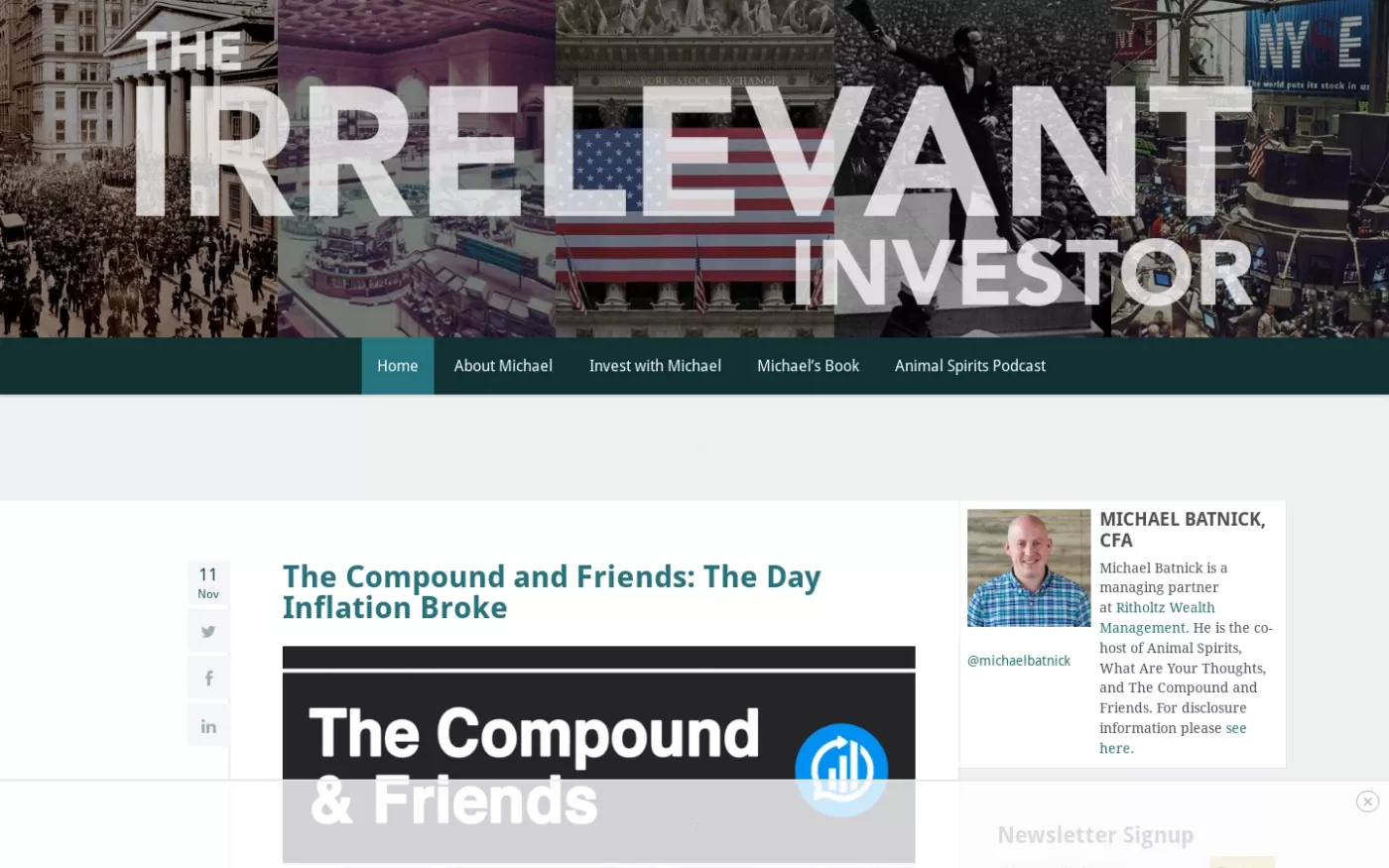
Screenshot of the The Irrelevant Investor Blog

The Irrelevant Investor is Michael Batnick's blog about markets, investing, and portfolio strategy. Batnick is a CFA charterholder and Director of Research at Ritholtz Wealth Management.

The blog hosts episodes of his shows, including Animal Spirits and The Compound and Friends. He also wrote Big Mistakes: The Best Investors and Their Worst Investments. The book draws lessons from costly errors made by famous investors.

Frequently Asked Questions

Are investing blogs a good source of financial advice?

Useful, but not personal advice. Blogs explain ideas and share data. They don't know your income, goals, or risk tolerance. For decisions about your own money, a fiduciary financial advisor is the better source.

Are free investing blogs as good as paid newsletters?

Often, yes. Many strong writers publish their best analysis for free. Paid services usually add specific stock picks, model portfolios, or extra research. Read the free content for a while before paying.

How do investing blogs make money?

Ads, affiliates, and subscriptions. Many earn a commission when readers open a brokerage account or buy a reviewed product. Trustworthy sites disclose these links clearly.

What credentials should an investing blogger have?

Credentials help but aren't required. A CFP or similar designation shows formal training. Many respected writers built trust through years of clear, transparent work instead. Look for an About page that says who writes the posts.

How often should a good investing blog publish?

Consistency beats volume. A few thoughtful posts a week is plenty. Daily market recaps age quickly, while long-term investing guides stay useful for years.

Can beginners learn to invest from blogs?

Yes, with the right starting point. Begin with blogs that explain index funds, ETFs, diversification, and compound interest. Skip sites that lead with hot tips or promise fast returns.

Types of Investing Blogs

Stock market news. Daily coverage of earnings, market moves, and individual companies. Best for active investors who follow specific stocks.

Long-term portfolio strategy. Posts on index funds, rebalancing, and staying invested through downturns. Financial advisors and wealth managers often write these.

Economics and housing. Analysis of jobs reports, inflation, and home sales. Useful for understanding what drives market cycles.

Value investing. Focuses on buying companies for less than they are worth. Many posts study famous investors and their shareholder letters.

Product reviews. Hands-on reviews of brokers, research tools, and trading platforms. Look for real testing, not just feature lists.

Investor behavior. Posts on why people buy high, sell low, and chase trends. Helpful for building habits that hold up in volatile markets.

How to Choose an Investing Blog

Match your investing style. A day trader and a retirement saver need different blogs. Pick writers whose time horizon matches yours.

Check who writes it. Look for a real name, a clear background, and how the site earns money.

Look for data, not hype. Good posts cite sources and show charts. Headlines that promise big gains are a red flag.

Read the archive. Older posts show whether a writer's views held up. Writers who admit past mistakes are usually more reliable.