Yes, directory backlinks are safe in almost every case. Google usually ignores or devalues a weak directory link rather than penalizing your entire site. The rare exception is when directory links make up a large, spammy share of your backlink profile. That pattern can look like a link scheme. So the real question isn’t “are directory links safe,” but “which ones, and how many.”
Key Takeaways
- Google almost always devalues low-quality directory links rather than penalizing your site. A manual action needs a link profile that looks deliberately manipulative.
- Directory links are safe when they’re relevant, indexed, and editorially reviewed. They get risky when you mass-submit to spammy, auto-approve directories.
- You rarely need to disavow old directory links. Google likely ignores them already. Put that effort into a few quality listings instead.
Are Directory Backlinks Safe? The Short Answer
Google has two ways to deal with a bad link, and only one of them hurts you.
The common one is devaluation. Google’s spam system, SpamBrain, spots a low-value link and quietly stops counting it. You get no boost, but no punishment either. Since Penguin became part of Google’s core algorithm back in 2016, this is how most weak directory links get handled. It happens in the background, and you never get a notice.
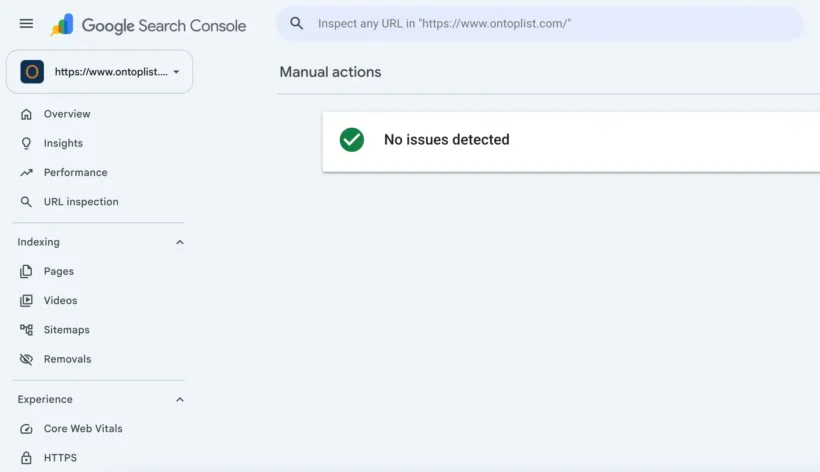
The rare one is a manual action. A human reviewer flags your site, and you see a warning in Google Search Console. This kicks in when your whole link profile looks like it was built to game rankings. A handful of directory listings doesn’t come close to that bar.
Most “directory penalties” people fear are really just links that quietly stopped passing value.
Google’s own link spam guidelines even say paid and directory links are fine, as long as they carry a nofollow or sponsored tag. That one rule clears most legitimate directories on the web.
5 Directory Backlink Myths vs. Reality
The fear traces back to the early 2000s. Marketers blasted their sites into hundreds of junk directories, and Google’s 2012 Penguin update wiped out the tactic overnight. The panic outlived the tactic by more than a decade. Here’s what actually holds up in 2026.
Myth 1: “Directory links will get you penalized”
Reality: For a normal site, they won’t. Google devalues links it doesn’t trust far more often than it punishes sites for having them. A penalty needs intent, meaning a profile stuffed with paid or irrelevant links across dozens of spam directories. A few relevant listings never trigger that.
Myth 2: “Directories are dead”
Reality: They changed jobs. They stopped being a ranking shortcut and became a trust signal. Consistent listings help Google confirm your business is a real entity, which feeds local SEO and the brand mentions that build your reputation across the web. AI search engines lean on the same directory data to verify who you are before citing you. That job matters more now, not less.
Myth 3: “More directory listings means faster rankings”
Reality: Volume is the actual danger here. Submitting to 200 directories in a week is the exact footprint Google’s spam guidelines describe as a link scheme. Ten relevant, well-maintained listings beat a hundred random ones. The moment you’re chasing a number, you’re building the risky kind.
Myth 4: “Nofollow links are worthless”
Reality: You don’t submit to directories for link juice in the first place. A nofollow link still delivers a citation, an entity signal, and real referral traffic when someone clicks it. Google says nofollow is the correct, safe attribute for these links. So a nofollow directory listing isn’t a weak version of the real thing. It is the real thing.
Myth 5: “A high-DA directory is always safe”
Reality: Domain Authority tells you nothing about safety on its own. A DA 60 directory that auto-approves every submission and lists casino and pharma spam next to your business is still a bad neighborhood. Relevance, indexing, and editorial review decide whether a link helps you. The authority score is a rough filter, not a green light.
Safe vs. Risky Directories: The Signals That Matter
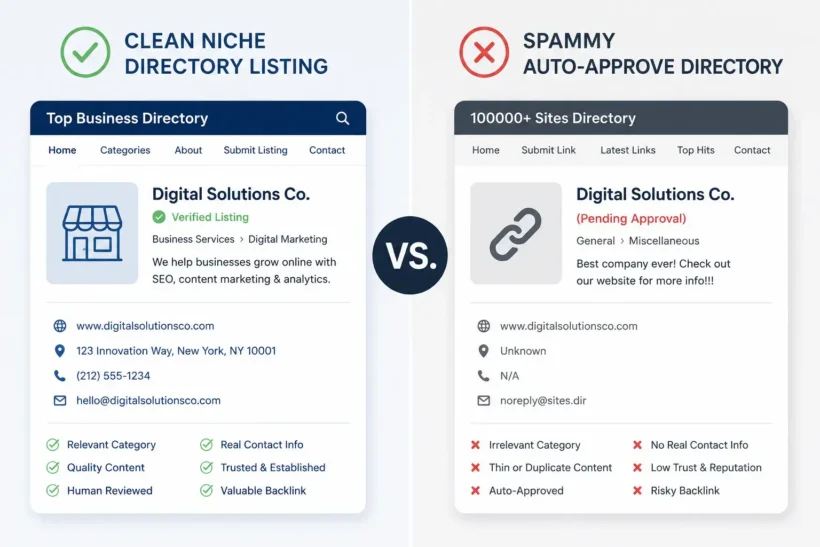
Before you submit anywhere, run the directory through a quick check. The gap between a link that helps and one that wastes your time comes down to a few signals.
| Signal | Safe directory | Risky directory |
|---|---|---|
| Approval | Reviews submissions, rejects junk | Auto-approves anything instantly |
| Indexing | Shows up in a site: Google search | Not indexed, so passes zero value |
| Neighbors | Real businesses in your category | Casino, pharma, adult spam mixed in |
| Relevance | Fits your industry or location | Random “add your link here” catch-all |
| Fees | Free or clear paid listing with nofollow | Sells dofollow links for ranking boosts |
One fast test beats all the metrics: search site:directoryname.com in Google. If the directory doesn’t appear, Google isn’t indexing it, and your link there is invisible. Skip it.
For a vetted starting point, our roundup of high-authority business directories covers platforms that pass every check above. And if you want the full picture on link evaluation, this breakdown of how Google actually weighs your backlinks fills in the rest.
What a Directory Reviewer Actually Sees Go Wrong
Here’s the part most guides can’t tell you, because they’ve never sat on the review side of a web directory.
Running a live directory, the pattern is obvious within seconds. The submissions that get flagged share the same tells: a description keyword-stuffed with “best injury lawyer New York affordable cheap,” a phone number that doesn’t match the one on the company’s own site, and a website link that 404s. None of that is a Google problem. It’s a you problem, and it’s the same behavior that makes a link profile look manipulative at scale.
The safe move is boring, and it works. Use one accurate business name, address, and phone number everywhere. Write the description for a customer, not the algorithm. When you add your business listing to any directory, fill every field honestly and move on. Reviewers approve those at a glance, and Google trusts them for the same reason.
The listings that get clicked share one trait: a description written for the customer, not the search bar.
Frequently Asked Questions
Can directory submission hurt your SEO?
Rarely, and only at scale. A few relevant listings can’t hurt you. A backlink profile dominated by paid or spammy links can look manipulative and draw a manual review. The usual cost of bad directories isn’t a penalty. It’s wasted time on links Google already ignores.
Should I disavow low-quality directory links?
Almost never. Google’s John Mueller has said to use the disavow tool sparingly, mainly for links tied to a manual action. For ordinary low-quality links, Google’s systems already discount them. Disavowing on a hunch can accidentally cut links that were helping you.
Are directory profiles still worth it in 2026?
For local businesses and new sites, yes. They build citations, confirm your entity to search engines and AI tools, and boost online visibility. Treat them as a foundation, not a ranking strategy. Aim for maybe 10 to 15 percent of your link-building effort here and earn the rest editorially.
Conclusion
Directory link-building is safe when you’re picky. Google devalues the weak ones and reserves real penalties for profiles that are obviously gamed. Pick relevant, indexed, editorially reviewed directories, keep your business details consistent, and stop counting submissions. Do that, and links quietly work in your favor instead of against you.